

Suggested Resources
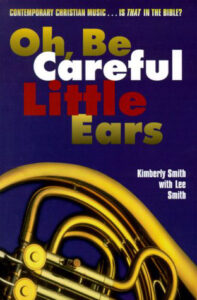
Oh, Be Careful Little Ears (Contemporary Christian Music, is That in The Bible? )
This first book gives a brief overview of the development of Christian music from both historical and biblical perspectives. It shows why many forms of contemporary Christian music (CCM) are not biblical, according to Ephesians 5:19 and Colossians 3:16, which instruct us to sing “spiritual songs.” [Publish date: 1997]
You will learn…
* how to identify carnal Christian music and why it’s carnal,
* why good motivations should not be the only consideration for the Christian’s music,
* why adding Christian lyrics alone does not make all types of music acceptable,
* and much more.
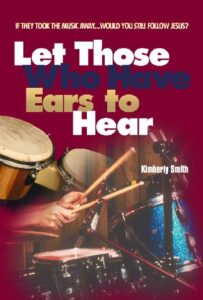
Let Those Who Have Ears to Hear (If They Took the Music Away, Would You Still Follow Jesus?)
A follow-up to the first book, this book continues the discussion about CCM–why it is a controversial issue and its resulting consequences to the church. Fifty excuses used to defend carnal CCM are biblically refuted. You will learn when drums are “right,” and when they are “wrong”; how the term “contemporary music” applies throughout history and why carnal CCM is different. [Publish date: 2001].
You will learn…
* when drums are “right,”
* when drums are “wrong,”
* how the term “contemporary music” applies throughout history and why CCM is different,
* steps to help you and your family begin to discern music,
* and much more.
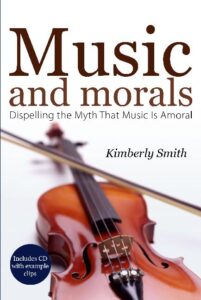
Music and Morals (Dispelling the Myth That Music Is Amoral)
Solid proof from science, sound and music researchers, and secular rock artists that music is not amoral. This book also demonstrates how music affects us positively or negatively, apart from any lyrics. Learn why immoral music is more powerful than Christian lyrics, and the differences between moral and immoral music techniques. [Publish date: 2005]
You will learn…
* scientific evidence proving that music has positive or negative effects on the listener,
* why immoral music is more powerful than Christian lyrics,
* the difference between moral and immoral music techniques,
* the underlying meanings of certain types of rhythms,
* and much more.